With the acceleration of power grid construction and the large-scale integration of new energy projects, the handover test of newly built cable lines has become a key link to ensure the safe operation of the power system. However, faced with a wide variety of testing equipment on the market, many engineering and technical personnel feel confused when selecting: what "physical examination" tools should be equipped for new cable operation? How to match the most suitable testing plan for cables with different voltage levels and installation environments?
First, clarify "what to test": the core test item for the operation of new cables
The goal of the new cable commissioning test is to verify whether the cable is damaged during transportation, laying, and accessory installation, and to ensure that the insulation performance meets operational requirements. According to the IEEE 400 series standards and relevant regulations such as GB 50150 and DL/T 849.6 in China, a complete cable commissioning test usually includes the following items: outer sheath insulation resistance test, AC withstand voltage test, and partial discharge detection. Among them, AC withstand voltage test is the most direct and effective means to discover insulation defects, and it is also the top priority in equipment selection.
According to standard requirements, there is a significant difference in the AC withstand voltage test voltage for cables of different voltage levels: the test voltage for 10kV cables is about 22kV, for 35kV cables it is about 52kV, and for 110kV cables it usually reaches 128kV or above. This voltage step directly determines the capacity and voltage level selection of the testing equipment.
AC voltage resistant equipment: series resonance and very-low frequency each have applicable scenarios
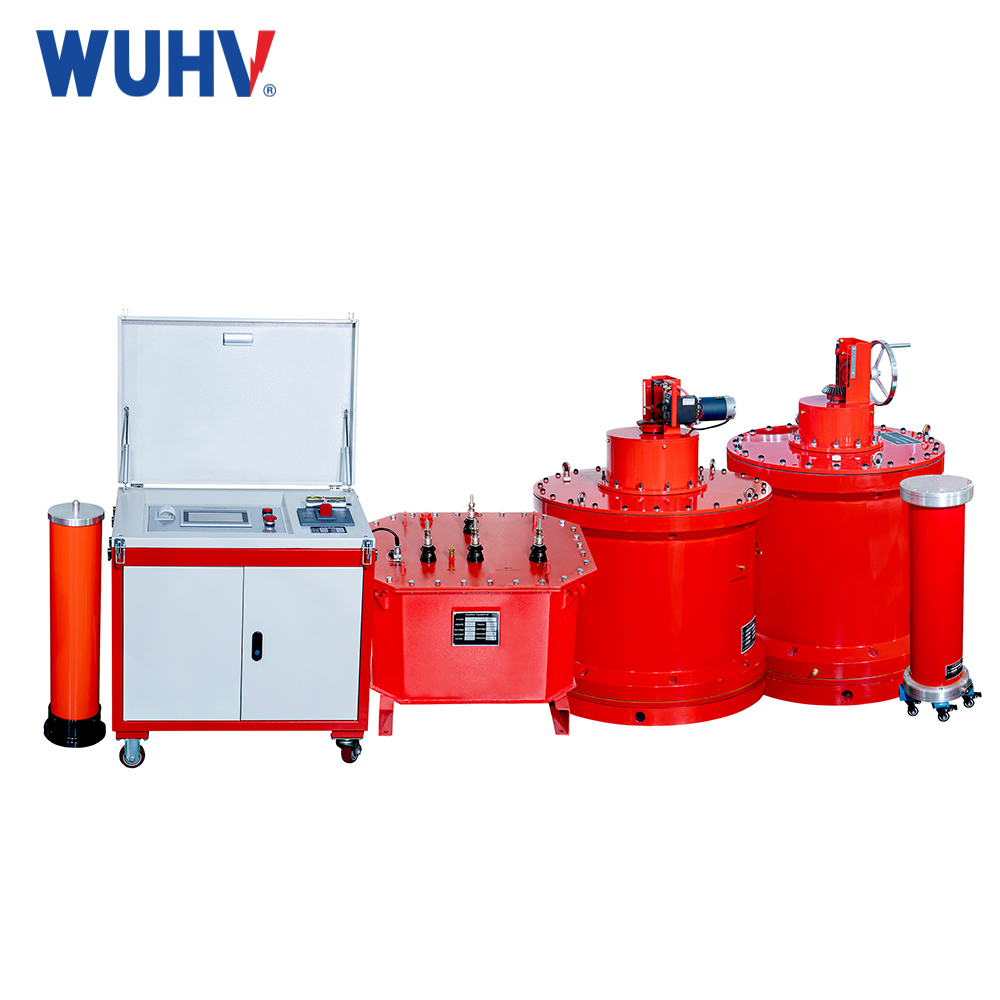
For medium and high voltage cables, the frequency conversion series resonance test device is currently the most widely used AC withstand voltage equipment. The principle is to form a resonant state at a specific frequency by adjusting the inductance of the reactor and the capacitance of the test sample. The power supply only needs to provide active power to maintain oscillation, thereby significantly reducing the required power supply capacity and system weight. Taking the UHV series series series resonant device of Wuhan UHV Power Technology Co., Ltd. as an example, the equipment is equipped with variable frequency resonant technology, which can stably output 70kV high voltage at low input power. It has the characteristics of low energy consumption, small size, and accurate testing, and its performance meets domestic and foreign standards.
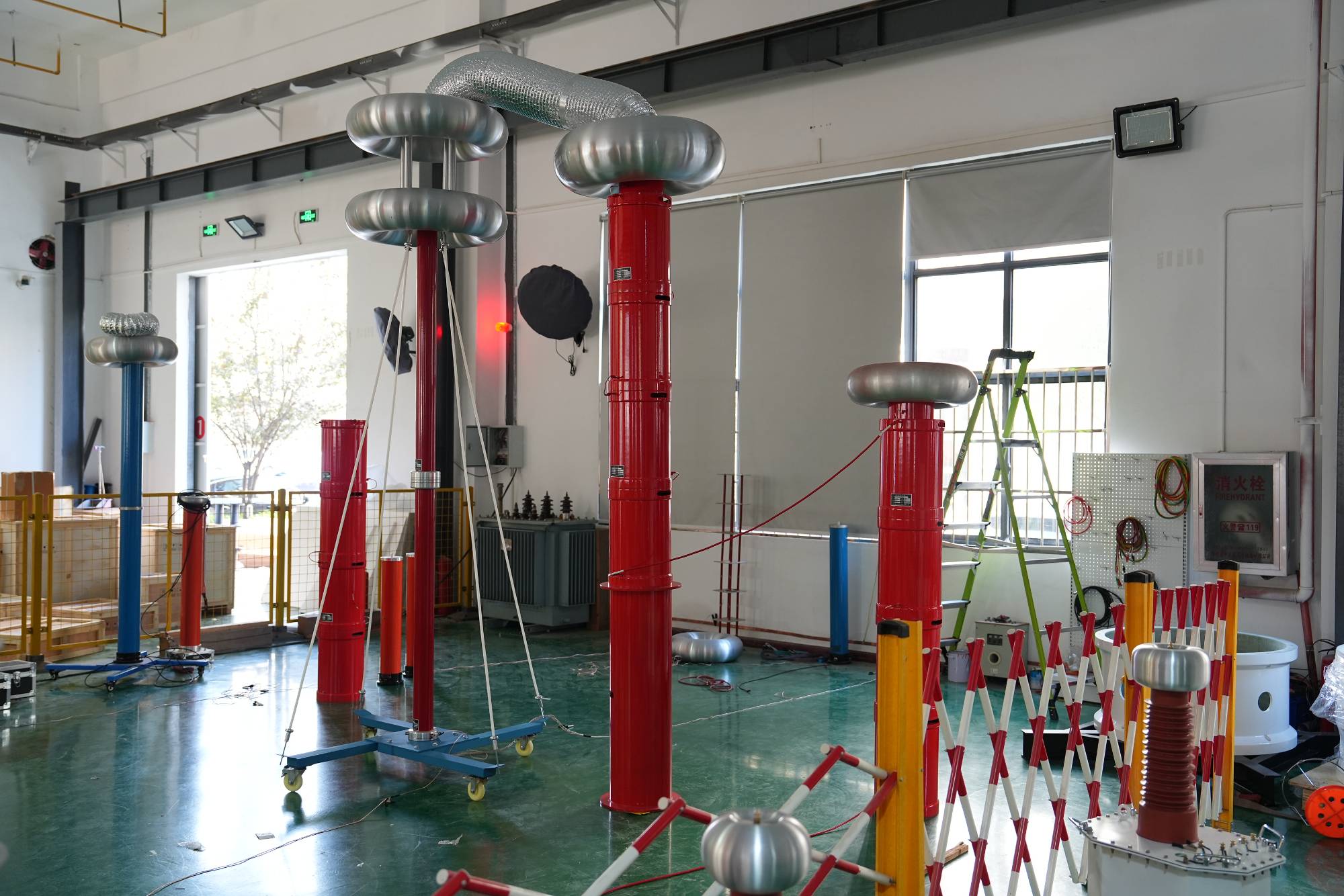
In practical engineering, the series resonance device of Wuhan UHV has accumulated rich on-site experience. In a 110kV, 8-kilometer long cable withstand voltage test in Hangzhou, the company dispatched an after-sales technical team to participate throughout the entire process, and all indicators of the test met the requirements. In addition, this series of devices has been successfully delivered to a well-known cable manufacturing factory in South Korea for large-scale factory testing. The equipment integrates intelligent functions such as automatic tuning, overvoltage protection, real-time data acquisition, and remote monitoring, and has been highly recognized by Korean customers.
For preventive testing and handover testing of 10kV and 35kV distribution network cables, very-low frequency high voltage generators demonstrate unique portability advantages. This device outputs 0.1Hz sine wave or cosine square wave high voltage, and its capacity can be reduced to 1/500 of the power frequency test. It is small in size and easy to operate, especially suitable for on-site working environments such as underground and narrow channels. The new generation very-low frequency series products of Wuhan UHV adopt a 7-inch touch screen and imported high-speed AD acquisition circuit, with a measurement accuracy of 3% and waveform distortion controlled within 5%. They have a high cost-effectiveness in the field of medium and low voltage cable testing.
Status diagnosis equipment: from "pass/fail" to "health assessment"
In addition to the withstand voltage test, the state evaluation of the new cable after operation cannot be ignored. The damping oscillation wave state detection system (DAC) can conduct non-destructive tests on cables under AC voltage conditions. By combining damping oscillation wave withstand voltage with partial discharge detection, potential defects in cable insulation can be discovered. The Wuhan UHV-505 damping oscillation wave state detection system can output a peak damping AC voltage of 30kV. The partial discharge measurement range covers 1pC to 100nC, and the partial discharge positioning measurement accuracy can reach 1% of the total length of the cable. It also supports uploading test data to the cloud for remote analysis. This device is suitable for detecting power cables, control cables, and signal cables in high and medium voltage substations, as well as cable detection scenarios in GIS and AIS substations.
Selection Practice: Four Key Judgment Dimensions
Based on industry practice and standard requirements, the selection of new cable commissioning testing equipment can be approached from the following dimensions:
Firstly, the voltage level determines the basic parameters of the equipment. The rated output voltage of the equipment must be greater than or equal to the maximum test voltage specified by the standard, and a certain margin must be retained. The industry usually recommends configuring with a margin of 1.1 to 1.25 times to cope with insufficient output caused by on-site capacitance changes and frequency deviations.
Secondly, the cable length and capacitance determine the equipment capacity. The larger the capacitance of the test sample, the higher the required test capacity. The capacity calculation of communication equipment follows P=ω CU ², and accurate estimation or reference to the cable parameter manual is required to obtain the capacitance value when selecting. For long-distance large section cables, series resonant devices are a more practical choice.
Thirdly, pay attention to the testing taboos of XLPE cables. It should be noted that the use of high-voltage direct current withstand voltage equipment for testing cross-linked polyethylene (XLPE) cables is strictly prohibited, as direct current voltage may cause cumulative damage to XLPE insulation. This is also an important reason for the comprehensive promotion of communication withstand voltage and ultra-low frequency testing in the industry in recent years.
Fourth, pay attention to portability and on-site adaptability. The equipment used on site should focus on weight, volume, and ease of handling. The UHV series series resonance device of Wuhan UHV adopts split design. In the actual project, 300kW frequency conversion resonance test system without partial discharge and 10000kVA/500kV series resonance device were delivered to PetroChina in Karamay, Xinjiang, covering the detection requirements of special scenarios such as petrochemical industry.
Enterprise perspective: Deeply cultivating technological accumulation in the field of high-voltage electrical measurement
Wuhan UHV Power Technology Co., Ltd. has been focusing on the field of high-voltage power testing for over 22 years, with product lines covering multiple categories such as series resonance testing devices, partial discharge testing systems, high-voltage insulation withstand voltage, transformer testing, circuit breaker testing, etc. At present, its products have been exported to more than 100 countries and regions around the world, and have achieved equipment delivery and application verification in domestic and foreign projects such as the Gobustan 100MW photovoltaic project in Azerbaijan and the Yangquan Coal Industry high-voltage electrical testing equipment procurement project.
For the operation of new cables, selecting the right testing equipment is only the first step, and the technical support and on-site service capabilities behind the equipment are equally crucial. Wuhan UHV has dispatched engineers to follow up on equipment installation, commissioning, parameter calibration, and operation training throughout projects such as the 110kV cable withstand voltage test in Hangzhou and the delivery of cables from a Korean cable factory, ensuring smooth operation of the equipment. This "device+service" model also provides additional assurance for the reliability of cable commissioning testing.